
Puzzles, Solutions, and Determination

Daily writing prompt
What skill would you like to learn?

My photography teacher in high school advised me that I should narrow down my interests. My conservatory professor urged me not to take dance or focus on any activities that were outside of my chosen major. Coworkers and friends ask “do you have any hobbies?” and, after listing them, with a whistle and wide eyes say “wow that’s a lot!”. I’ve tried to narrow down the list of topics I’d like to learn and could never seem to drop anything, but I don’t worry about it anymore.

Providing someone the tools to solve their problem is my biggest passion. My main hobby is problem solving.

Every new challenge, hobby and subject are components to solving a puzzle. My hobbies bring me enjoyment because they offer skills or a portfolio of knowledge which increases my ability to support others. There are so many hobbies, it would bore you to read them if listed off. Hands-on hobbies teach me a number of useful skills. Learning new things, regardless of the subject, gives me insight into another person’s life; their pain, joy, passions, and perspectives are more clear when I have a better understanding of the things they do or interact with each day.

I’ll probably never be an expert in many of my sub-hobbies; but I’m positive I’ll be an expert at problem solving. The most beautiful thing about humanity is our ability to adapt. Watching someone solve a problem, or realize there’s an acceptable solution to the things most bothering them, is captivating. It’s even better to watch a team come together, move out of the “what do we do?” panic phase, and bring their vision to life with resolve and focus. A major contributor to this mindset is the experience I had the year that I asked different classmates to help me make the art piece below. Before each class, I sat next to a classmate and we worked on it together. The classmates changed, but the interest and focus never did. Everyone wanted to see it finished and for many it was clear they felt proud to be included. Viewing the resolve and focus on their faces as they worked was magical.
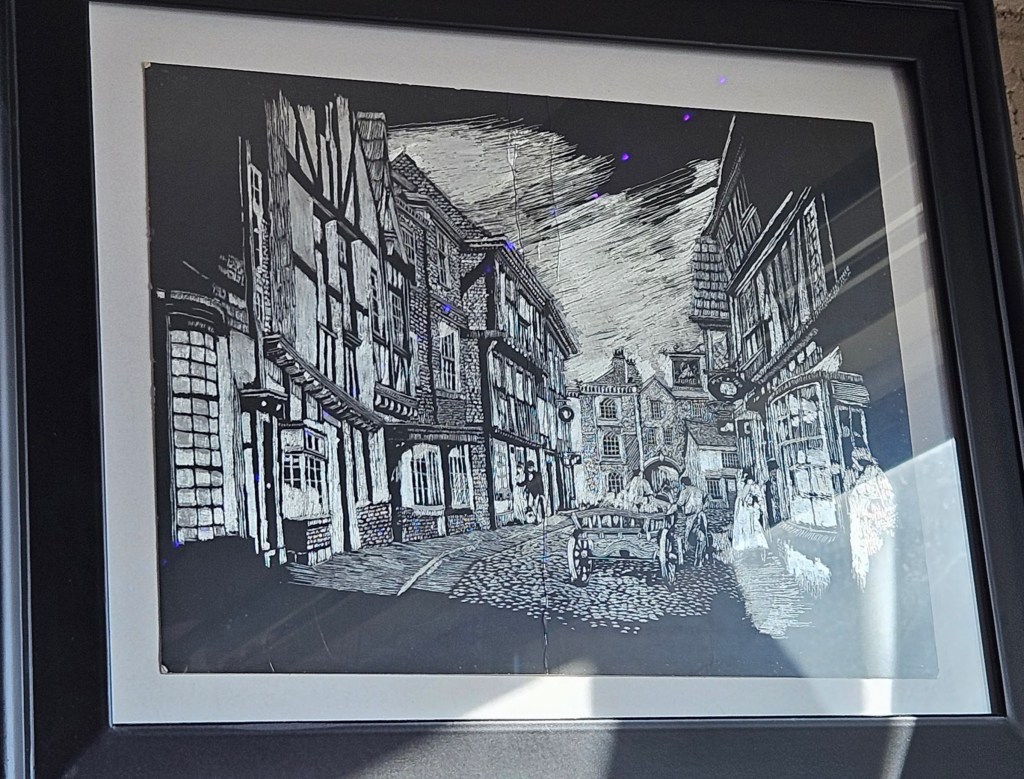
Bringing people out of panic mode, or out of a state of apathy, and watching their expressions carry hope, pride, and determination fills my heart with joy and fulfills me in ways none of my hobbies alone could ever do. I want to learn as many things as possible in my life, but the art of bringing people together through a solution- through a shared goal – is a skill I want to master. To me, there’s no better skill to have; and learning about as much of the world as I can is one way to develop it.

Guide and Grow

Daily writing prompt
What are you passionate about?

I have many passions in life: hobbies I love, people I care about, and mindsets I try to maintain. All of those passions boil down to one thing: growth. In every situation and interaction there are opportunities to grow. I’m passionate about mine and other’s growth.

Each day, I think about what I did that I’m proud of, and what I could have improved; if I can manage to do better going forward, I’ll feel accomplished. The thermometer for success in my own life has always been growth. If life ceases to be challenging, or provide opportunities for improvement, I’ll know I need to make some changes in order to continue my own growth.

I cannot force others to believe they have room for growth, or make space in their lives for it. I can help facilitate growth when I’m given the opportunity to. When others ask for feedback, I do my best to support their personal level of growth, not an immediate jump to an ideal they may, or may not, be ready for. Even in this task, I’m still growing and learning more gentle and effective approaches for providing guidance.

The prospect of my own or other’s growth, and having the privilege to witness or experience it, is what gets me out of bed. People never stop growing, and the prospect of that is truly something to look forward to.

Real Not Ideal

Daily writing prompt
What is the legacy you want to leave behind?

In previous posts I’ve talked a little about not needing to be likable; I’ll be the villain in someone’s story at some point. While it sounds nice to say “I’d like my legacy to be that everyone thinks of me as respectful, compassionate, and someone who acts with integrity,” I don’t think it’s realistic.

My legacy should be impactful. When I’m gone, I’d like my loved ones to stop and think before acting – to consider the quality of their actions. I’d like to be one reason others reach for respect, compassion, and integrity in everything they do, but no one is perfect and I don’t expect my legacy to be a constant ideal. If I can cause others to more frequently consider respect, compassion, and integrity I would consider my legacy a success.

Follow The Leader

Daily writing prompt
Are you a leader or a follower?

I don’t believe there are any times when I’m only a leader or a follower. I’ve led leadership training sessions, guided less-senior classmates and coworkers, and set examples for friends and family in situations they were less familiar with. In the same way, those people have all led, guided, and set examples for me in situations I’m less familiar with, or in ways I didn’t have as strong of a perspective on.

Leadership, to me, is not about control or ordering others to do things; it’s about helping to guide people with a shared vision in reaching their goals, and setting an example that others may choose to follow, if they like the perceived outcome. Leadership is about providing a possible road for others to travel down, and showing them what walking down it looks like. Sometimes, I am the one leading the journey, and sometimes I step back to allow others to show me a better way.

Try Before Die

Daily writing prompt
Do you have a quote you live your life by or think of often?

When I was in high school, I found a quote online:

Anyone desperate enough for suicide should be desperate enough to go to creative extremes to solve problems: elope at midnight, stow away on the boat to New Zealand and start over, do what they always wanted to do but were afraid to try. — Richard Bach

When I’m going through a rough time, I try to remember that.

If the options I’m comfortable with are no longer options, I try to reach out and choose one that might be uncomfortable at first, but might solve more problems than it causes. Needing to adjust to a new way of living, new support systems, and new challenges are things that I can learn to overcome. Death isn’t something anyone can come back from; if I’m willing to die, I should be willing to live first.

FOMO

Daily writing prompt
What makes you nervous?

As a Spoonie, chronic illness isn’t who I am, but it affects every aspect of my life. My friends and family, career, pets, hobbies, thoughts, wants, and day-to-day are all changed because of the chronic illness I have. This means I miss out on some things that I wish I could do. More than that, I end up looking back on choices I made as a kid and as a healthy individual and think, “I could’ve done so much more, but I thought I had more time”.

I faced the possibility of dying young, at the age of 4, so I’ve always tried to take advantage of life, that’s not new. As a kid, I thought I’d have more time with my body working normally, so I rested more and said no to more things than I would choose to now. When I got sick in 2015, my first thought was how many times I should’ve said yes to an opportunity or invitation. In some ways, I was granted a second chance to experience more of life; I still have a lot of my functionality left, and I’m extremely lucky.

What makes me nervous, is waking up and looking back on my life and realizing I missed a chance to experience something. I try hard each day to make sure I’ve done everything I had the energy to do, but also while resting properly so I don’t lose more of my health. Finding that balance between rest and experience is stressful, and a lot of people with chronic illness deal with it. When I’m resting my body, though, I try to think “I’m resting now, so I can fully enjoy the next moment I have energy for”. Treating recuperation this way helps quiet the nervous ticking of the clock in my head, telling me I could be running out of time. The rest is learning to accept that there are just some things I can no longer do, but there’s still so much out there for me to experience. I’m not really missing out, just taking a different kind of tour of life. I’m always going to be nervous, but if I do my best to experience the present as much as possible I’m sure I’ll have fewer regrets.

Choices Ripple Outward

Daily writing prompt
Jot down the first thing that comes to your mind.

I’ve spent a lot of time thinking about how each choice we make affects others. There’s tons of literature and films that cover this concept, and I think about it far more often than is probably healthy, but it can be fun too. If you suffer from decision paralysis, it might be a good time to stop reading.

I enjoy a thought experiment, where a scenario is given; the goal is to identify all the possible negative or positive ways a choice or event may affect others, no matter how small. For example, the scenario given might be something unavoidable, like a baby crying through the night keeping their parents awake. Then, you’d brainstorm how that might affect other things. Maybe, the mother wakes up exhausted, she snaps at her husband for asking where his keys are, his mood sours and he goes out to get his morning coffee. At the café, he insults the barista who, in their upset over this, doesn’t notice they’ve forgotten to fully close the lid on a police officer’s cup. The officer spills their coffee, and in their bad mood treats a man stealing food for his family more harshly than he normally would. That man ends up in jail, causing his family to suffer. These scenarios can be brief and generalized, or lengthy and specific.

Once the initial dominos are set, I like to consider how one person might positively affect the situation. Take the scenario you’ve laid out, and add a choice into it that changes everything for the better; one positive action that affects every other. In our current example, that might be that the baby’s grandmother comes to help out with night care, so the parents can sleep. Mom wakes up well rested – helps dad find his keys who is glad to get out on time, feeling supported by his partner. His decides to compliment the barista and pay for the officer’s coffee. The officer had a pleasant morning and his faith in humanity is restored. When he’s asked to cover the theft case, he convinces the shop owner to give the man a job to help pay back the money owed. Charges aren’t filed, and the man starts out on a career path that sets him and his family up for a more secure future.

When I make my own choices, I try to remember that doing something kind for one person might help others, might make more kindness, and might even come back to affect me in some way. Doing something unkind might have a similar, but negative, effect. We all have choices; most times they’re half chance, but I firmly believe that when given the opportunity to make one, the kinder choice creates more good in the world. Our choices ripple outwards and have a larger effect than we might think.

Compliment, Not Creepy

Daily writing prompt
Describe a random encounter with a stranger that stuck out positively to you.

The internet is flooded with stories of men who seem like they’re trying to compliment a woman, but end up scaring her instead. It can be frightening to be approached by someone who seems kind at first, but then won’t leave you alone to go about your day. I’ve been on that end of things: herded by a group of men into a corner, to (thankfully) have a key to a building they didn’t expect me to have and get away. That interaction started with a simple compliment from one of them.

You can imagine, after that experience, compliments from men on the street might provoke more caution. I was on my way to class from a parking lot, and a young man approached me who wouldn’t stop staring. Bracing myself, I waited for him to get within comment distance, and he said “Wow, you’re beautiful!” I said thank you and waited for him to stop and expect me to stay and chat. I was pleasantly surprised when he said “I hope you have a great day!” and walked on his way.

It was the first time in my entire life that a random guy had said something kind, and didn’t expect anything from me in return. Where I was treated like a human being by someone who didn’t know me, and not a commodity to be gained. He wanted to say something considerate, without passing on his information or asking for mine, and go about his day. It wasn’t the compliment, it was the way he went about it that was important to me. Feeling like a person and not a conquest is a much better feeling than just feeling beautiful; I’m glad he passed my way that day.

Learning to Try

Daily writing prompt
Describe a decision you made in the past that helped you learn or grow.

As an adult, I’ve learned to follow through with things; as a kid I struggled to stick to one thing and finish it. I took dance classes as a child and quit for other things. I re-started dance classes as a 16 year old – which is a bit older than most students. I decided to audition for our high school’s flag/dance team. Anyone who knew me would have been shocked to find out I’d done that; it was out of character for me.

We’d be doing a boot camp to get us all in shape and learn the skills we needed to audition, so I went for it. A week in, a few girls dropped out, and I’d started to realize I most likely wasn’t skilled or in-shape enough to keep up with the better dancers. I decided to stay and follow through with the process, realizing that either way I was gaining some great dance training and exercise. You can imagine how things turned out: I didn’t make it. Other girls told me that I’d done really well for my experience level, and I was extremely proud of the muscle and flexibility I’d gained during the camp.

More than those things, I’d gained a new perspective on failure and learning. I started to realize that just because I wasn’t going to make the team, that didn’t mean the process wasn’t valuable. I stepped out of my comfort zone and took part in something I’d never done before, and even though I “failed” at the end goal, I gained so many things from the experience that I still use today. Now, deciding whether or not do something, I ask myself: If the only thing I have to lose is time, and experience can be gained, why not do the thing?

For My Health and Self

Daily writing prompt
Describe a positive thing a family member has done for you.

There are a lot of ways to become a well-adjusted adult and a lot of ideas of what that might look like. For me, the traits I value that I believe much of society values as well are: respect, responsibility, self-motivation, and compassion. There are others, but my parents helped instill these in me in ways I feel made my life easier, not harder. Specifically, my mother, who consistently taught me about the balance between pushing yourself and resting. In my life, she’s the OG of the “work-life balance”. She respected my autonomy and personal boundaries without fail, and stood up for my freedom to be myself and choose my own life.

I can’t narrow-down what she’s done for me to just one action, but I can give you two major times her positive effect rippled into years of my life. When I was young and still figuring out who I was, and everyone had an opinion on what that should be, and when I was an adult and my condition started to become more extreme and debilitating. Both times, her respect and compassion helped me to grow and build those traits for myself.

When I was younger I was never forced to go to family gatherings, extracurriculars, friend’s houses etc. but was asked to make the choice myself. People may disagree with this, but I think it helped me grow into a better adult because the choices weren’t someone else’s, they were mine. The consequences the arose from those choices were then mine too, and I learned to take responsibility for them. My mother gave me the room I needed to figure out who I was, build confidence in that identity, and to make choices in my life that aligned with that. I knew that if I chose not to visit someone or attend an event I had no one else to blame if I didn’t like the end-result. Not only that, it also meant that every interaction I had was authentic and un-forced. It led to my own self-motivation in the tasks I took up, and a sense of care and integrity towards everything I do. She also taught me about respecting my body too: knowing when I was too ill or exhausted to keep pushing. It’s been a helpful balance that lets me prioritize the things important to me, while knowing when to recuperate for the other important aspects of my life.

In 2015, I was struck with temporary, moderate gastroparesis due to a virus, which meant I was extremely malnourished for an extended period. It also contributed to my pre-existing arrhythmia becoming more severe and chronic, and to the development of a second type of arrhythmia. I was miserable, and bedridden, and at the time we didn’t know what was wrong. Being a cardiac nurse, my mom had seen many patients decondition to the point of requiring even more treatment to get back on their feet. My entire life she’d stressed the need for rest when we were feeling bad; this time she was stressing the need for growth in a safe environment. Every day, we walked while my dad waited at home near the car, in case I passed out or needed driven back home. I truly believe this is why I’m not wheelchair bound today; considering my first nurse in a dysautonomia clinic I was admitted to said, “I didn’t realize you were my patient, you’re the first one I’ve had in years with these issues that isn’t in a wheelchair.” My mom worked hard to show me how to tell for myself when it was important to rest and when it was important to push myself. Every day that I am grateful I can still travel without a wheelchair, eat without a tube, and live without a pace-maker, I have my mother to thank for.

My mother gave me years of her time and compassion; on its own, that’s a hugely positive thing to do for someone. By example, she also taught me to respect others and myself, have compassion, take responsibility for the direction my choices lead me in, and to motivate myself to get work done or to rest when needed. There are so many others in my life who have helped give me those lessons too, but on top of all of those things I have my mother to thank for the amount of physical ability I still have left. She made sure I kept as much of my health as I was able to, and that is the most positive effect I can think to have on someone. Thanks, Mom.