Wasted Interactions, Computers, and Connection

Videogames, Risk, and Growing in Life

Puzzles, Solutions, and Determination

Daily writing prompt
What skill would you like to learn?

My photography teacher in high school advised me that I should narrow down my interests. My conservatory professor urged me not to take dance or focus on any activities that were outside of my chosen major. Coworkers and friends ask “do you have any hobbies?” and, after listing them, with a whistle and wide eyes say “wow that’s a lot!”. I’ve tried to narrow down the list of topics I’d like to learn and could never seem to drop anything, but I don’t worry about it anymore.

Providing someone the tools to solve their problem is my biggest passion. My main hobby is problem solving.

Every new challenge, hobby and subject are components to solving a puzzle. My hobbies bring me enjoyment because they offer skills or a portfolio of knowledge which increases my ability to support others. There are so many hobbies, it would bore you to read them if listed off. Hands-on hobbies teach me a number of useful skills. Learning new things, regardless of the subject, gives me insight into another person’s life; their pain, joy, passions, and perspectives are more clear when I have a better understanding of the things they do or interact with each day.

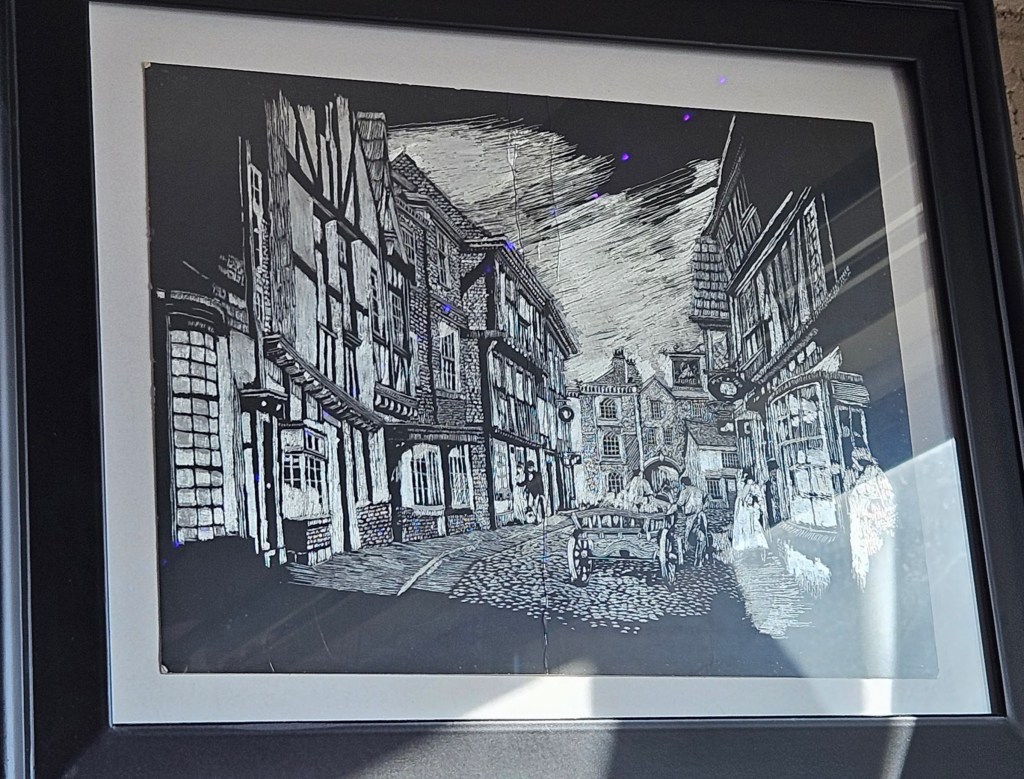
I’ll probably never be an expert in many of my sub-hobbies; but I’m positive I’ll be an expert at problem solving. The most beautiful thing about humanity is our ability to adapt. Watching someone solve a problem, or realize there’s an acceptable solution to the things most bothering them, is captivating. It’s even better to watch a team come together, move out of the “what do we do?” panic phase, and bring their vision to life with resolve and focus. A major contributor to this mindset is the experience I had the year that I asked different classmates to help me make the art piece below. Before each class, I sat next to a classmate and we worked on it together. The classmates changed, but the interest and focus never did. Everyone wanted to see it finished and for many it was clear they felt proud to be included. Viewing the resolve and focus on their faces as they worked was magical.

Bringing people out of panic mode, or out of a state of apathy, and watching their expressions carry hope, pride, and determination fills my heart with joy and fulfills me in ways none of my hobbies alone could ever do. I want to learn as many things as possible in my life, but the art of bringing people together through a solution- through a shared goal – is a skill I want to master. To me, there’s no better skill to have; and learning about as much of the world as I can is one way to develop it.

Guide and Grow

Daily writing prompt
What are you passionate about?

I have many passions in life: hobbies I love, people I care about, and mindsets I try to maintain. All of those passions boil down to one thing: growth. In every situation and interaction there are opportunities to grow. I’m passionate about mine and other’s growth.

Each day, I think about what I did that I’m proud of, and what I could have improved; if I can manage to do better going forward, I’ll feel accomplished. The thermometer for success in my own life has always been growth. If life ceases to be challenging, or provide opportunities for improvement, I’ll know I need to make some changes in order to continue my own growth.

I cannot force others to believe they have room for growth, or make space in their lives for it. I can help facilitate growth when I’m given the opportunity to. When others ask for feedback, I do my best to support their personal level of growth, not an immediate jump to an ideal they may, or may not, be ready for. Even in this task, I’m still growing and learning more gentle and effective approaches for providing guidance.

The prospect of my own or other’s growth, and having the privilege to witness or experience it, is what gets me out of bed. People never stop growing, and the prospect of that is truly something to look forward to.

Real Not Ideal

Daily writing prompt
What is the legacy you want to leave behind?

In previous posts I’ve talked a little about not needing to be likable; I’ll be the villain in someone’s story at some point. While it sounds nice to say “I’d like my legacy to be that everyone thinks of me as respectful, compassionate, and someone who acts with integrity,” I don’t think it’s realistic.

My legacy should be impactful. When I’m gone, I’d like my loved ones to stop and think before acting – to consider the quality of their actions. I’d like to be one reason others reach for respect, compassion, and integrity in everything they do, but no one is perfect and I don’t expect my legacy to be a constant ideal. If I can cause others to more frequently consider respect, compassion, and integrity I would consider my legacy a success.

Follow The Leader

Daily writing prompt
Are you a leader or a follower?

I don’t believe there are any times when I’m only a leader or a follower. I’ve led leadership training sessions, guided less-senior classmates and coworkers, and set examples for friends and family in situations they were less familiar with. In the same way, those people have all led, guided, and set examples for me in situations I’m less familiar with, or in ways I didn’t have as strong of a perspective on.

Leadership, to me, is not about control or ordering others to do things; it’s about helping to guide people with a shared vision in reaching their goals, and setting an example that others may choose to follow, if they like the perceived outcome. Leadership is about providing a possible road for others to travel down, and showing them what walking down it looks like. Sometimes, I am the one leading the journey, and sometimes I step back to allow others to show me a better way.

“Likable”

I saw a portion of a speech by Chimamanda Ngozi Adichie (3:45) in which she mentions not worrying about likability, and I was inspired. I’ve found this to be more true than ever in my professional life as well as my personal life – especially as a woman. “Likeable” is a word that we can use to describe so many kinds of people.

“Likeable” is a word that can be used to describe a manager who uses their authority to prey on a subordinate they view as attractive, to get what they want from that person with little threat of recourse, because they hold the power and others’ opinions of their likability. “Likable” is a mask used to make someone seem kind and friendly, when behind their mask they work to manipulate the situation, to stamp out anyone and anything that may paint them in a bad light or surpass them. “Likable” is a term to describe a pedophile, who is so beloved and trusted by friends, family, and neighbors that ever-cautious, diligent, protective parents will allow their most precious people – their children – close to that person. Meanwhile, that person spreads a stain across their child’s life, hidden behind their “likable” nature.

Likeable can be many things; used to describe deeply cruel and unethical people just as much as it can be used to describe kind and ethical people. “Likeable” is the teacher who buys hygiene products, food and clothes for students in need. “Likeable” can be the manager who takes an interest in each team member’s hobbies and personal goals. “Likeable” can be used to describe a lawyer who takes a case at a discount or pro-bono to help protect those who have been harmed by other, less-kind, “likable” individuals.

Some individuals are “likable” because they give all of themselves, without boundaries or limitations, to everyone who needs them-until they whither away to nothing inside and out. “Likeable” can be a person who says yes to everyone; never making anyone feel unwanted, unnoticed, or “too much”, but when asked to choose a side to stand up for others they will say “Not me. I’m staying out of it.”

I don’t want to be “likable”. I want to be the person that good and ethical people come to for advice because they know I am also good and ethical. I want to be hard working. I want to stand up for what is right; to not be afraid to go to battle to protect others or to prevent others from experiencing harms which were done to me. I do not want to be “likable”, I want to be the person bad people hate. I want unethical people to view me as the villain in their lives. I want those who bully, and manipulate others in order to meet their goals, to dislike that I will hold them accountable for their actions.

“Likeable” is a descriptive word for someone’s opinion of you gleaned from how much they can gain or lose based on your existence. It is not a descriptive word for moral code, or how trustworthy someone is. It is a mask that hides cruel and spiteful humans who require likability in order to avoid accountability. If I am likable to someone, just as equally I should be unlikable to someone else. If I base my worth and success on whether I am likable, I may lose the substance of character that makes me strong, ethical, compassionate, and dependable. I don’t want to be “likable”. I want to be respected.

Try Before Die

Daily writing prompt
Do you have a quote you live your life by or think of often?

When I was in high school, I found a quote online:

Anyone desperate enough for suicide should be desperate enough to go to creative extremes to solve problems: elope at midnight, stow away on the boat to New Zealand and start over, do what they always wanted to do but were afraid to try. — Richard Bach

When I’m going through a rough time, I try to remember that.

If the options I’m comfortable with are no longer options, I try to reach out and choose one that might be uncomfortable at first, but might solve more problems than it causes. Needing to adjust to a new way of living, new support systems, and new challenges are things that I can learn to overcome. Death isn’t something anyone can come back from; if I’m willing to die, I should be willing to live first.

All The Difference

It’s been a while since I’ve written any blog posts. I’ve taken a bit of a hiatus because I’ve spent the time focusing on my health and personal growth. After writing in the past on New Year’s “resolutions”, it feels right to build on my standpoint of constant growth by explaining the progress I’ve made over the years. Here are some things I’ve learned to do in my personal and professional life, and some things I know to do that I haven’t quite mastered yet:

The Obvious:

Do your best

Every day, even when I’m feeling tired or jaded, I try to give my best work to the tasks I do. It applies to my personal and professional life. This isn’t just about doing your best with the task at hand, it’s also about setting yourself up for success with the next tasks. It’s a simple directive, but easy to deeply over analyze if you want to. Do your task; but also grow well, plan well, learn well, and maintain balance well.

I’m still working on this one. The reason why is because I’ve learned a lot about myself – how my mind works best, and how I learn best – and I’ve been learning how to adjust my lifestyle, schedule, and support system to make the most of it. For me, personally, I want to work through my own differences between how I function best and how the world/economic systems work, instead of treating those differences like immovable obstacles. Part of doing my best is believing that there’s always a way to improve on my performance, to adapt to difficulties, and to find collaborators who will work with, and make the most of, my own style of thinking instead of against it.

Be honest, but not blunt – unless you need to be

In my experience there is always a more diplomatic way to convey information. Being blunt, and in some cases aggressive, should be reserved for times when the other party chooses to use your polite honesty as a way to ignore what was said completely – and only when the matter is important enough to risk potentially burning bridges. Choosing your battles is as much a part of this process as choosing your words.

Sharing your opinions in an honest but respectful way, can do wonders in cultivating needed change. However, sometimes others do not care about your opinions. Bluntness can oftentimes help convey your own convictions and boundaries, rather than persuade others to change theirs. That has value, as long as you’re also open to the idea you may be wrong.

This is why I always choose polite honesty first, because there’s always a possibility the other party has information that could change my mind. Maybe their critique of me or their expression of their own convictions and boundaries could persuade me to see things differently. Part of honesty is being honest with yourself, and open to other’s bluntness with you when it’s called for.

Prioritize

No mystery with this one. Getting lost in “side quests” can cost you your goals.

This is one I work on every day. Some of the ways I try to do it well are:

  • Write down the day’s goals, and which tasks need to be done to get you there
  • Make a schedule, and do your best to stick as closely to it as possible
  • Be flexible. Shit happens; and sometimes we’ve got to pivot and adapt. Getting good at that has helped me more than any other skill I have. I can still improve on it too.
  • Remember that anything worth doing, is worth doing halfway. I only have so much time to get things done, sometimes a time limit forces a sacrifice of quality.

The Not-So-Obvious:

The jar of rocks, pebbles, and sand can be improved on – carefully

Many professionals have heard the analogy of the empty jar that needs to be filled with rocks, pebbles, and sand. If you wanted to fill it as full as possible you could start with rocks, then pebbles, then sand. That’s how it’s supposed to go, anyway; but something about that answer has always bothered me.

Maybe it’s because that analogy has been used to convince me to ignore tasks I viewed as a priority. I’d argue it’s more because logically I think it’s a phenomenal analogy that gets told in a way that short-changes managers, employees, and goal-setters. If you really wanted to fill the jar, the best way to do it would be to put a few rocks down, fill the gaps with pebbles, pack that with sand, then repeat the layers. Each day has one to a few large tasks, then there are smaller ones that help fill in the gaps.

I firmly believe that if we put off the small tasks simply because they’re small, we’ll be left with large gaps in our potential and performance. Learning to understand the careful balance between large and small tasks is the best way to make the most of our time and ability. We don’t fill the jar up right away with large stones, we do it in parts and layers.

An example of how I do this is with my email. Let’s say I have a particularly hectic day, and I only have time to read the most important emails and handle them. There will come a time when the tiny emails (the sand), like spam or ads, will need to be sorted and removed, or my email storage will get filled very fast. The mid-priority emails (the pebbles), will eventually need to be responded to and handled or coworkers/friends/family may become upset or lose valuable productive time due to my delay. Instead of pushing off the sand and pebbles until my inbox is full-up or someone loses their patience with me, I take care of them every single day as long as I have time. Most days, I take care of the big emails a little bit, then handle some sand & pebble emails, then I go back and do more stone-sized emails. The jar gets packed as full as possible and my email stays well organized. I used to have the tendency to only focus on stones until the inbox storage was full, and then I lost long days on fixing it and robbed myself of easily obtained mental peace. Filling the jar in layers without losing focus has done me a lot of good for numerous endeavors.

Small bites

I read somewhere that the best way people learn is by learning in very small chunks at a time. 15 min each day, instead of 8 hours + once a week is the quickest way to solidify learning, for example. I try to apply this “small bite” concept to everything from my own lessons, to how I communicate with people.

I’m an over-explainer. I know this, and I know it needs to change. Many people can’t handle too much new information, and instead of helping them understand my perspective I end up overwhelming them, or worse, exhausting them. This is one I’m constantly working on; even while writing this.

As for learning, I try to do small 5-15 minute lessons each day in a topic I’m interested in, for a total of no more than an hour. I’ve learned a lot this way. Tasks can be done this way too as long as they don’t have an upcoming deadline.

Learn your audience

Some people will be details people, some people won’t be. Some people will care about you as a person, and why you do the things you do, and some won’t. Some people will want to know all the possibilities, and some will only want to know the most probable.

I’m still working on learning to gauge what the other person cares about in a conversation. In my professional life, this skill has become increasingly vital to success. One of my goals this year is to become better at succinct communication, and having the patience and wisdom to know that if someone wants details, they’ll ask. In my private life, this means recognizing that if someone doesn’t care enough to ever ask for details, then it may be time to move on and find the people who do care.

The Cynical:

Not everyone cares as much as you might

Professionally, I have the main things I care about: pride in my work, my coworker’s morale and well-being, and the future success of my employer. Personally I have a lot of passions that range in importance. Sometimes it’s hard to know that not everyone cares about the big things as much as I do. On the flip-side, I’m sure I’ve put someone else in that position about their own passions. I can’t change others, I can only change myself and how I respond to things, and focusing on that self-growth has provided me with a lot of peace.

Being skilled, or prepared, sometimes isn’t enough

Life happens. Murphy’s law sometimes wins the day. Everyone has room to grow and learn, and so even someone who has prepared and practiced will eventually meet their match in a situation. Instead of beating myself up about my failures, I try to treat each one as a learning opportunity. Spending my energy learning and growing is a much better use of it, than to spend it having remorse for my failures or bad luck.

Leaders don’t always lead well

Most people have had a moment where a teacher, parent, manager, or other person of authority seemed to make a bad or harmful choice. Not everyone who has responsibilities, or a position of power, is going to be immediately good at it. I’ve learned it’s best to focus on trying to help others grow in their positions than removing them from them. Speaking your mind honestly (as described above) can play a big part in this.

A good example of this is an experience I had with a phlebotomist who removed a needle incorrectly, and gave me a large hematoma. My mother is a nurse who has a talent for safely and painlessly doing that type of work, so I knew the phlebotomist had made a mistake. When I called to report it, I made it clear I just wanted her retrained to prevent other patients from experiencing the same thing. That was back in 2014; I’m pleased to say that she’s still working there today in 2023 and is one of the best phlebotomists at the location. A mistake made is valuable experience that builds an expert. If we constantly force people to start fresh, we’ll always have beginners.

The Hopeful:

Everyone wants to be heard

One of the most basic human wants is to be heard and understood. It’s what drives our relationships and vital connections with one another. It’s a good thing to remember, personally and professionally.

I try to be a good listener in every interaction; and I could stand to improve as a listener. I think if we all listened more it would make us better professionals, better partners, better friends and family members. We can learn a lot from one another if we’re listening, and when we’re equally listened to we gain valuable contributions to our mental health and sometimes build important relationships.

If people know they’re making a difference, they keep doing it

This point isn’t about the people who don’t care; we can’t change them. This point is for the people who care, but have never been made aware of the difference they’re making. I’ve learned that if I want to feel motivated, learning more about why someone’s asked me to complete a task helps me do that. Knowing how I’m contributing to the big picture is a major factor in whether I perform a task well.

I try to take this with me when I write notes or advice for coworkers, or when I take a mentorship role in my personal life. Feeling like they have a purpose often provides enough motivation for someone to complete a task. Additionally, sometimes people just really need the “why”, otherwise it feels like busy-work, or a pointless task.

One person can make a difference

I know this is true because one person made a difference for me. Years ago I was doing very badly at my first university; I was dealing with a mental health crisis and didn’t yet understand the importance of asking for help. I struggled alone by staying at home, missing classes, dropping friendships, and eating only once a week, at the same restaurant. The crew at that hour knew me, and it was clear by looking at me that I wasn’t doing well, but I was always there on Wednesdays. For two months I stopped going, I was reaching the point where existing just didn’t seem worth it, and I stepped out for one more day to go eat at my favorite place. I got in line and the usual girl yelled “You’re okay!!! We were so worried about you when you stopped coming in.” It took everything I had not to burst into tears at the counter. That one girl saved my life; and she didn’t even know it. Because of her, everything I’ve done from that point on has been possible. If my actions have an effect on anything, it can be attributed to her kindness.

One person, one moment, one small action can make all the difference in a million different ways, for a million different people. Ripples outward that affect other things, and so on. I spend every day trying to remember how important that one stranger was to me, so that I remember to be kind, say the nice things when I have a chance, and to do my best in everything I do. It does make a difference.

Happy New Year. I hope you’ll make the most of it.

Perspective, Reality, and Happiness

When I was young I went through some traumas that shaped how I viewed and moved through the world. I spent a good amount of my childhood reading non-fiction, daydreaming, and immersing myself into any imaginative activities that allowed me to escape how I was feeling and what was going on in my life. This is normal for kids, and usually isn’t an issue. I don’t think it was an issue for me either, but because my brain had me focusing on surviving through my problems, I lost some of the growth a lot of young kids, teens, and young adults gain.

Outwardly, I know I’ve grown a lot when it comes to friendships and social interactions. I’m more confident, I don’t shy away from certain experiences and activities anymore. I’ve learned to listen more, and to reciprocate in friendships in a way that I was horrible at as a teen and young adult. I still have a lot of growing to do when it comes to interactions with people. I could probably write an entire article on all the ways my PTSD affects my relationships with others, how hard I’ve worked to overcome that, and how much more work I have ahead of me. I’m aware of the growth in that respect because it makes itself visible through a kind of “return” in life: more friendships, better conversations, a general sense that my interactions were more positive.

The part of my own growth that I didn’t realize until recently, was more internal. The results were less visible and the effect on my life wasn’t as apparent to me:

Perspective.

Those childhood daydreams I had were often about fantastical scenarios: super powers, saving the world, having an easier life, meeting hobbits, battling orcs, living the lives of my favorite characters from all kinds of different media. I immersed myself in fantasy because facing my own life was something I wasn’t ready for. Facing my own faults and traumas was difficult, and imagining a world where flying on broomsticks didn’t exist just didn’t seem as fun. My perspective was focused on unrealistic goals and stories because I didn’t think improving my own life was as possible. It felt like I had to wait for help, or a miracle, or someone to hand me an opportunity.

I was, actually, handed a lot of opportunities and I passed them by. I wasn’t ready and they often involved interacting with people in ways that I just didn’t know how to do yet. I needed to grow more. Instead of recognizing that my lost opportunities were, in fact, my fault, my young mind framed it in a way that made it feel less like my fault and more like random chance or circumstance, or someone else’s fault. My perspective was coming from a less developed place; that’s okay. Everyone learns and grows at their own pace, and you cannot do things you’re not ready to do without it causing more issues later on. I try not to beat myself up about the things I caused myself to miss out on.

As I’ve gotten older, my daydreams and interests have become more focused in realistic goals. Does this mean I never fantasize about flying on a dragon, or helping a wizard with a quest? No. Enjoying non-fiction is a great hobby, and everyone deserves time to relax and unwind once in a while. But I also do something I learned from a very wise friend a long time ago: chase discomfort. I look for things I can change, and if I have to be uncomfortable while I change them, that’s okay. In fact, it’s how we grow. If we’re always comfortable, our bodies and our minds never learn how to adjust to new things, new problems, new stimuli. We also generally learn to take the comfortable for granted; you need both comfort and discomfort to appreciate both the good and the bad things in life.

My daydreams now focus on the things I want to achieve: things that now feel within my reach. Things that would make me happy, and that don’t need to be some fantastical scenario involving magic, miracles, or princes who save me from the bad things in my life. I can tackle the bad things on my own, or with the help of people who care for me.

Instead of flying on broomsticks, I want to learn to do a backflip or a b-twist. Instead of swimming with mermaids or sliding down ice hills with magical penguins, I want to learn to hold my breath for 5 minutes or more, or spend 2 minutes or more in an ice bath as I practice the Wim Hof Method. Instead of having fairy godmothers make me new clothes that fit well and never get dirty, I want to learn to design and sew my own clothes. Instead of riding in the TARDIS with The Doctor and automatically having languages translated for me, I want to spend the time and energy learning 8+ languages so that I can meet people from all-over and make my own adventures.

I no longer focus on the destination or the results. Half the fun in life, and all of the experience, come from the journey of reaching goals. I love the days I take cold showers, or do breath-work. I adore sitting down to solve a difficult problem or try something a bit more physically challenging. This change in perspective has made me happier. It’s so much easier to look at my life feeling grateful for the good things, and accepting the bad ones. I no longer question “why did this happen to me?” and instead I ask “How can I make it better, or learn to live with it?”. It’s no longer “How can I survive?” but “How can I thrive?”

Being physically ill, and having to focus on survival, probably had a lot to do with this change in perspective. When you have to accept that your life might not be as long as you thought, and that time is out of your control, you also start thinking about all the things you’d miss; surprisingly, the bad things are there too. You learn this in therapy as well; especially when you’re learning to heal with PTSD. Learning to accept the bad things is part of the process. Learning to notice the great things is too. All of life, is what makes it life – pain and pleasure both. I will continue to chase discomfort and grow.