
Puzzles, Solutions, and Determination

Daily writing prompt
What skill would you like to learn?

My photography teacher in high school advised me that I should narrow down my interests. My conservatory professor urged me not to take dance or focus on any activities that were outside of my chosen major. Coworkers and friends ask “do you have any hobbies?” and, after listing them, with a whistle and wide eyes say “wow that’s a lot!”. I’ve tried to narrow down the list of topics I’d like to learn and could never seem to drop anything, but I don’t worry about it anymore.

Providing someone the tools to solve their problem is my biggest passion. My main hobby is problem solving.

Every new challenge, hobby and subject are components to solving a puzzle. My hobbies bring me enjoyment because they offer skills or a portfolio of knowledge which increases my ability to support others. There are so many hobbies, it would bore you to read them if listed off. Hands-on hobbies teach me a number of useful skills. Learning new things, regardless of the subject, gives me insight into another person’s life; their pain, joy, passions, and perspectives are more clear when I have a better understanding of the things they do or interact with each day.

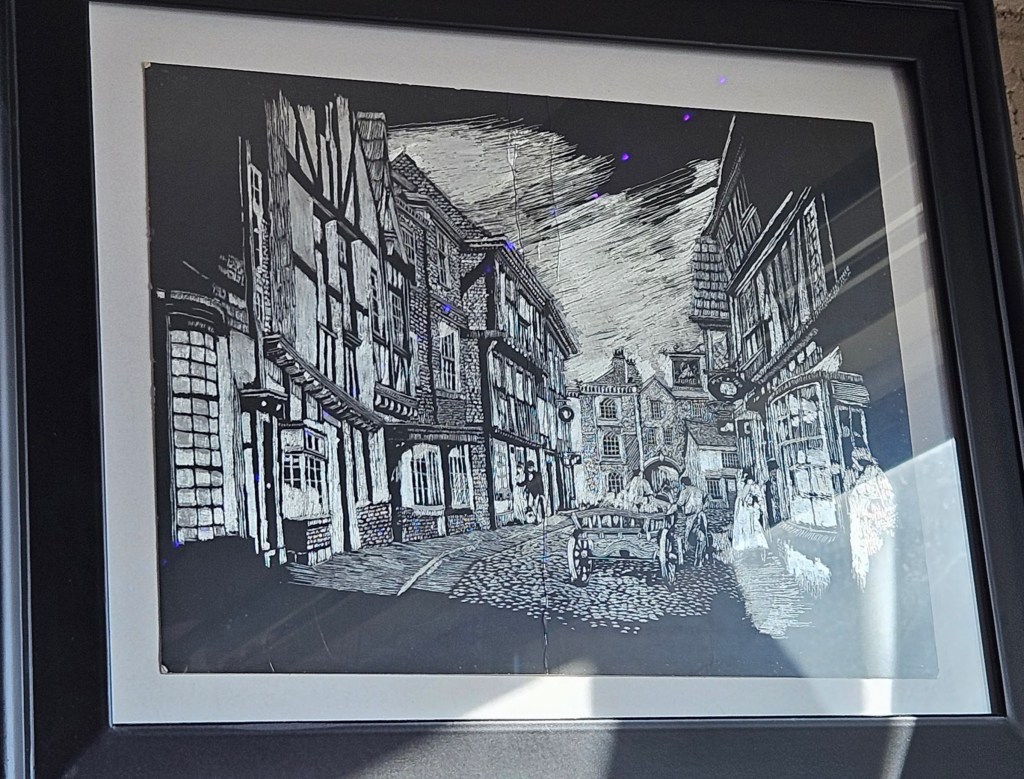
I’ll probably never be an expert in many of my sub-hobbies; but I’m positive I’ll be an expert at problem solving. The most beautiful thing about humanity is our ability to adapt. Watching someone solve a problem, or realize there’s an acceptable solution to the things most bothering them, is captivating. It’s even better to watch a team come together, move out of the “what do we do?” panic phase, and bring their vision to life with resolve and focus. A major contributor to this mindset is the experience I had the year that I asked different classmates to help me make the art piece below. Before each class, I sat next to a classmate and we worked on it together. The classmates changed, but the interest and focus never did. Everyone wanted to see it finished and for many it was clear they felt proud to be included. Viewing the resolve and focus on their faces as they worked was magical.
Bringing people out of panic mode, or out of a state of apathy, and watching their expressions carry hope, pride, and determination fills my heart with joy and fulfills me in ways none of my hobbies alone could ever do. I want to learn as many things as possible in my life, but the art of bringing people together through a solution- through a shared goal – is a skill I want to master. To me, there’s no better skill to have; and learning about as much of the world as I can is one way to develop it.

Comfort Facilitates Productivity

Daily writing prompt
What strategies do you use to increase comfort in your daily life?

Discomfort is necessary in order for people to grow and learn; comfort is necessary for healing, and for the longevity required to put that growth to use and encourage more in the future. Sometimes comfort aids productivity and practicality; it’s a great way to reduce the effects of PTSD when everything else around you feels very uncomfortable. My biggest strategies for comfort are integrated into my day-to-day in a way that makes room for the discomfort necessary for growth.

I’d like to focus on what I do on work days, or “productive days” (for when I have planed tasks but no paid work hours). Sources of discomfort that negatively affect my productivity – as someone with chronic physical illness, PTSD, and ADHD – should be quickly dealt with so that I can bring my best self to the proverbial table. I’ve got an arsenal of strategies at hand that will hopefully help some readers with similar problems:

  • Staying hydrated:
    • Filling up multiple, or one large, water bottle(s) first thing in the morning helps conserve dopamine during the day and ensures you’re drinking the best amount of water for your body’s needs.
    • Chew ice. It’s especially nice in a warm environment, or if chewing helps you focus.
  • Gain nourishment:
    • Sometimes cooking is difficult or too time consuming. Eat single ingredients right out of the package, or bulk meal prep on a solid day off and freeze your favorites to be eaten on a rotating basis all month (or longer).
    • If food helps you focus, keep dopamine inducing snacks nearby while you work – like your favorite treat or, my personal favorite, spicy snacks. Nothing helps me focus like a bowl of Fuego Takis, a V8 with Tabasco sauce, chili chocolates, or a spicy jerky stick.
  • Fight fatigue:
    • Whether you’ve got a heart condition, chronic pain, PTSD, ADHD, various forms of narcolepsy, other illness, or you just aren’t able to get as much sleep as your body needs, being able to fight extreme drowsiness is useful when taking a rest isn’t possible. Some of my favorites are also strategies for increasing dopamine to reduce ADHD issues:
      • Spicy foods
      • Scary podcasts/audiobooks (if it doesn’t interfere with your task)
      • Ice cold showers, ice cold foot-baths
      • Self-massage or foot rollers
      • Quick breaks for stretching or calisthenics
      • Wim Hof method breathing
      • Doing a quick walk around the room/up the stairs/around the house/block.
  • Reduce sensory overload or sensitivity:
    • If you tend to itch/hurt/lose focus etc. from certain stimuli or from stress, this is for you. The easiest one: wear something comfortable; how can you focus if the itchy lace from your blouse or your too-tight collar are distracting you?
    • If you’re feeling anxious, try to identify why or if there are things going on making it worse.
      • I like to try changing whether or not music is on or off, the type of music, and the volume.
      • I think about whether my sitting position is giving me pain that I’m consciously ignoring, but I’m sub-consciously being distracted by.
        • Add pillows, sit on the floor, change locations, take a pain-reliever, make sure your physical needs are being met (did you have water? food? sleep?).
      • Maybe you deal with itchy scalp or dry skin, or allergy itch;
        • See if applying a gentle moisturizer/oil, taking a cool shower, wiping with a cool cloth, applying ice, or brushing your hair and pulling/pinning it back help.
        • Wipe out your ears, wash your face, or brush your teeth (or chew something minty) to feel a bit more refreshed.
  • Adjust your momentum flow:
    • Sometimes, the greatest tool at our disposal is our own inner momentum. I keep my daily momentum by adjusting my schedule to suit my brain.
      • You’ll have to find your own schedule but here’s one of my options depending on the day/my needs: I wake up early enough to get showered/eat breakfast/feel awake, partly because this gives me time before work to complete an errand. I don’t clean on the weekends, I use the early morning time to start with a cleaning task, and spread them out across the weekday mornings.
        • This starts my day with high momentum and lets me decrease it slowly throughout the day. I spend the rest of the day completing work or self-improvement tasks, then I can wind down into personal time and resting. This means I don’t have to deal with the difficulty of transitioning from a high momentum task (like showering, which uses a lot of spoons for me), to a lower momentum, then back to a high momentum like cleaning.
  • Increase your confidence:
    • A high level of confidence can greatly improve your comfort and willingness to try something new, meet new people, speak publicly, or tackle a difficult task. One of the ways I improved my own confidence was to build a wardrobe that made me more comfortable and confident.
      • Find out what clothes you feel more confident in, and then identify what’s stopping you from wearing them. For example, I love skirts, but I hate the limitations in sitting and movement if I want to meet the level of modesty and professionalism I personally prefer to have, and dislike not having pockets. Instead of just not wearing them, I wear tennis/bike shorts with large pockets underneath.

Ultimately, what works for one person may not work for everyone. In fact, what works for me, might have the opposite effect for you. My hope is that this list sparks your own ideas and helps guide others to incorporating the type of comfort into your life that helps you be the best you can be. Good luck!

Guide and Grow

Daily writing prompt
What are you passionate about?

I have many passions in life: hobbies I love, people I care about, and mindsets I try to maintain. All of those passions boil down to one thing: growth. In every situation and interaction there are opportunities to grow. I’m passionate about mine and other’s growth.

Each day, I think about what I did that I’m proud of, and what I could have improved; if I can manage to do better going forward, I’ll feel accomplished. The thermometer for success in my own life has always been growth. If life ceases to be challenging, or provide opportunities for improvement, I’ll know I need to make some changes in order to continue my own growth.

I cannot force others to believe they have room for growth, or make space in their lives for it. I can help facilitate growth when I’m given the opportunity to. When others ask for feedback, I do my best to support their personal level of growth, not an immediate jump to an ideal they may, or may not, be ready for. Even in this task, I’m still growing and learning more gentle and effective approaches for providing guidance.

The prospect of my own or other’s growth, and having the privilege to witness or experience it, is what gets me out of bed. People never stop growing, and the prospect of that is truly something to look forward to.

Real Not Ideal

Daily writing prompt
What is the legacy you want to leave behind?

In previous posts I’ve talked a little about not needing to be likable; I’ll be the villain in someone’s story at some point. While it sounds nice to say “I’d like my legacy to be that everyone thinks of me as respectful, compassionate, and someone who acts with integrity,” I don’t think it’s realistic.

My legacy should be impactful. When I’m gone, I’d like my loved ones to stop and think before acting – to consider the quality of their actions. I’d like to be one reason others reach for respect, compassion, and integrity in everything they do, but no one is perfect and I don’t expect my legacy to be a constant ideal. If I can cause others to more frequently consider respect, compassion, and integrity I would consider my legacy a success.

Follow The Leader

Daily writing prompt
Are you a leader or a follower?

I don’t believe there are any times when I’m only a leader or a follower. I’ve led leadership training sessions, guided less-senior classmates and coworkers, and set examples for friends and family in situations they were less familiar with. In the same way, those people have all led, guided, and set examples for me in situations I’m less familiar with, or in ways I didn’t have as strong of a perspective on.

Leadership, to me, is not about control or ordering others to do things; it’s about helping to guide people with a shared vision in reaching their goals, and setting an example that others may choose to follow, if they like the perceived outcome. Leadership is about providing a possible road for others to travel down, and showing them what walking down it looks like. Sometimes, I am the one leading the journey, and sometimes I step back to allow others to show me a better way.

Half-Chance Choices

Daily writing prompt
What gives you direction in life?

The choices we make tend to build out the direction we live our lives in. The thing that gives my life the most direction is what factors I take into account when I make choices. Is it kind/compassionate? Am I doing the right thing? Will this put me or my loved ones at risk, or harm anyone? Is this choice necessary in order to meet my goals? Will this choice make me happy, or support long-term happiness? I feel if I make choices based on the things that are most important to me, I’ll end up in the direction I want to be, or that fits me the best.

I feel a lot of people’s choices are half chance, because we don’t get a choice in many of the factors that make up our experiences. We can help offset that by being mindful and deliberate about the choices we make, and I try to do that as much as possible. Of course, sometimes I also just flip a coin!

Try Before Die

Daily writing prompt
Do you have a quote you live your life by or think of often?

When I was in high school, I found a quote online:

Anyone desperate enough for suicide should be desperate enough to go to creative extremes to solve problems: elope at midnight, stow away on the boat to New Zealand and start over, do what they always wanted to do but were afraid to try. — Richard Bach

When I’m going through a rough time, I try to remember that.

If the options I’m comfortable with are no longer options, I try to reach out and choose one that might be uncomfortable at first, but might solve more problems than it causes. Needing to adjust to a new way of living, new support systems, and new challenges are things that I can learn to overcome. Death isn’t something anyone can come back from; if I’m willing to die, I should be willing to live first.

FOMO

Daily writing prompt
What makes you nervous?

As a Spoonie, chronic illness isn’t who I am, but it affects every aspect of my life. My friends and family, career, pets, hobbies, thoughts, wants, and day-to-day are all changed because of the chronic illness I have. This means I miss out on some things that I wish I could do. More than that, I end up looking back on choices I made as a kid and as a healthy individual and think, “I could’ve done so much more, but I thought I had more time”.

I faced the possibility of dying young, at the age of 4, so I’ve always tried to take advantage of life, that’s not new. As a kid, I thought I’d have more time with my body working normally, so I rested more and said no to more things than I would choose to now. When I got sick in 2015, my first thought was how many times I should’ve said yes to an opportunity or invitation. In some ways, I was granted a second chance to experience more of life; I still have a lot of my functionality left, and I’m extremely lucky.

What makes me nervous, is waking up and looking back on my life and realizing I missed a chance to experience something. I try hard each day to make sure I’ve done everything I had the energy to do, but also while resting properly so I don’t lose more of my health. Finding that balance between rest and experience is stressful, and a lot of people with chronic illness deal with it. When I’m resting my body, though, I try to think “I’m resting now, so I can fully enjoy the next moment I have energy for”. Treating recuperation this way helps quiet the nervous ticking of the clock in my head, telling me I could be running out of time. The rest is learning to accept that there are just some things I can no longer do, but there’s still so much out there for me to experience. I’m not really missing out, just taking a different kind of tour of life. I’m always going to be nervous, but if I do my best to experience the present as much as possible I’m sure I’ll have fewer regrets.

Choices Ripple Outward

Daily writing prompt
Jot down the first thing that comes to your mind.

I’ve spent a lot of time thinking about how each choice we make affects others. There’s tons of literature and films that cover this concept, and I think about it far more often than is probably healthy, but it can be fun too. If you suffer from decision paralysis, it might be a good time to stop reading.

I enjoy a thought experiment, where a scenario is given; the goal is to identify all the possible negative or positive ways a choice or event may affect others, no matter how small. For example, the scenario given might be something unavoidable, like a baby crying through the night keeping their parents awake. Then, you’d brainstorm how that might affect other things. Maybe, the mother wakes up exhausted, she snaps at her husband for asking where his keys are, his mood sours and he goes out to get his morning coffee. At the café, he insults the barista who, in their upset over this, doesn’t notice they’ve forgotten to fully close the lid on a police officer’s cup. The officer spills their coffee, and in their bad mood treats a man stealing food for his family more harshly than he normally would. That man ends up in jail, causing his family to suffer. These scenarios can be brief and generalized, or lengthy and specific.

Once the initial dominos are set, I like to consider how one person might positively affect the situation. Take the scenario you’ve laid out, and add a choice into it that changes everything for the better; one positive action that affects every other. In our current example, that might be that the baby’s grandmother comes to help out with night care, so the parents can sleep. Mom wakes up well rested – helps dad find his keys who is glad to get out on time, feeling supported by his partner. His decides to compliment the barista and pay for the officer’s coffee. The officer had a pleasant morning and his faith in humanity is restored. When he’s asked to cover the theft case, he convinces the shop owner to give the man a job to help pay back the money owed. Charges aren’t filed, and the man starts out on a career path that sets him and his family up for a more secure future.

When I make my own choices, I try to remember that doing something kind for one person might help others, might make more kindness, and might even come back to affect me in some way. Doing something unkind might have a similar, but negative, effect. We all have choices; most times they’re half chance, but I firmly believe that when given the opportunity to make one, the kinder choice creates more good in the world. Our choices ripple outwards and have a larger effect than we might think.

Compliment, Not Creepy

Daily writing prompt
Describe a random encounter with a stranger that stuck out positively to you.

The internet is flooded with stories of men who seem like they’re trying to compliment a woman, but end up scaring her instead. It can be frightening to be approached by someone who seems kind at first, but then won’t leave you alone to go about your day. I’ve been on that end of things: herded by a group of men into a corner, to (thankfully) have a key to a building they didn’t expect me to have and get away. That interaction started with a simple compliment from one of them.

You can imagine, after that experience, compliments from men on the street might provoke more caution. I was on my way to class from a parking lot, and a young man approached me who wouldn’t stop staring. Bracing myself, I waited for him to get within comment distance, and he said “Wow, you’re beautiful!” I said thank you and waited for him to stop and expect me to stay and chat. I was pleasantly surprised when he said “I hope you have a great day!” and walked on his way.

It was the first time in my entire life that a random guy had said something kind, and didn’t expect anything from me in return. Where I was treated like a human being by someone who didn’t know me, and not a commodity to be gained. He wanted to say something considerate, without passing on his information or asking for mine, and go about his day. It wasn’t the compliment, it was the way he went about it that was important to me. Feeling like a person and not a conquest is a much better feeling than just feeling beautiful; I’m glad he passed my way that day.