Wasted Interactions, Computers, and Connection

Puzzles, Solutions, and Determination

Daily writing prompt
What skill would you like to learn?

My photography teacher in high school advised me that I should narrow down my interests. My conservatory professor urged me not to take dance or focus on any activities that were outside of my chosen major. Coworkers and friends ask “do you have any hobbies?” and, after listing them, with a whistle and wide eyes say “wow that’s a lot!”. I’ve tried to narrow down the list of topics I’d like to learn and could never seem to drop anything, but I don’t worry about it anymore.

Providing someone the tools to solve their problem is my biggest passion. My main hobby is problem solving.

Every new challenge, hobby and subject are components to solving a puzzle. My hobbies bring me enjoyment because they offer skills or a portfolio of knowledge which increases my ability to support others. There are so many hobbies, it would bore you to read them if listed off. Hands-on hobbies teach me a number of useful skills. Learning new things, regardless of the subject, gives me insight into another person’s life; their pain, joy, passions, and perspectives are more clear when I have a better understanding of the things they do or interact with each day.

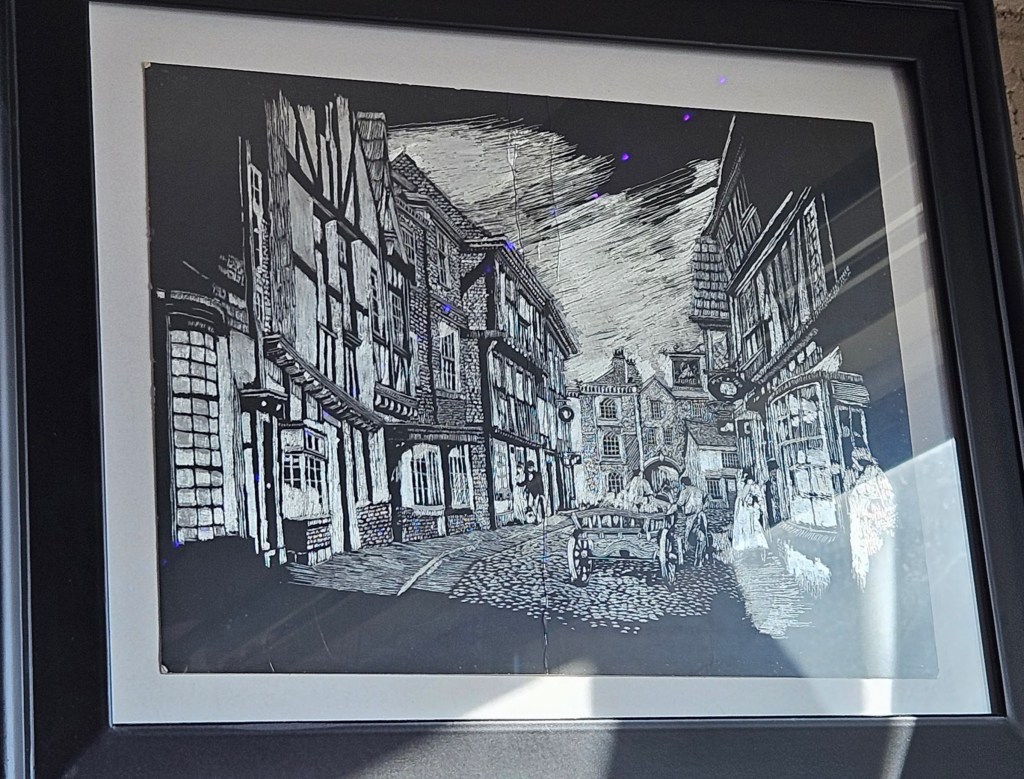
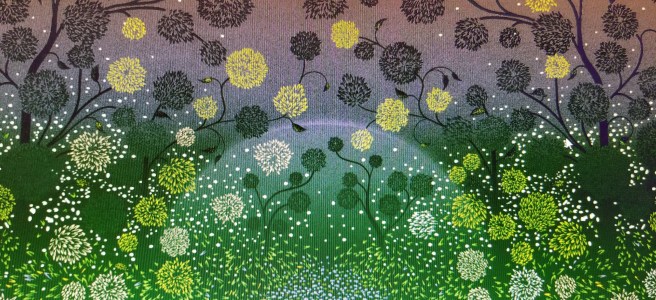
I’ll probably never be an expert in many of my sub-hobbies; but I’m positive I’ll be an expert at problem solving. The most beautiful thing about humanity is our ability to adapt. Watching someone solve a problem, or realize there’s an acceptable solution to the things most bothering them, is captivating. It’s even better to watch a team come together, move out of the “what do we do?” panic phase, and bring their vision to life with resolve and focus. A major contributor to this mindset is the experience I had the year that I asked different classmates to help me make the art piece below. Before each class, I sat next to a classmate and we worked on it together. The classmates changed, but the interest and focus never did. Everyone wanted to see it finished and for many it was clear they felt proud to be included. Viewing the resolve and focus on their faces as they worked was magical.

Bringing people out of panic mode, or out of a state of apathy, and watching their expressions carry hope, pride, and determination fills my heart with joy and fulfills me in ways none of my hobbies alone could ever do. I want to learn as many things as possible in my life, but the art of bringing people together through a solution- through a shared goal – is a skill I want to master. To me, there’s no better skill to have; and learning about as much of the world as I can is one way to develop it.

Comfort Facilitates Productivity

Daily writing prompt
What strategies do you use to increase comfort in your daily life?

Discomfort is necessary in order for people to grow and learn; comfort is necessary for healing, and for the longevity required to put that growth to use and encourage more in the future. Sometimes comfort aids productivity and practicality; it’s a great way to reduce the effects of PTSD when everything else around you feels very uncomfortable. My biggest strategies for comfort are integrated into my day-to-day in a way that makes room for the discomfort necessary for growth.

I’d like to focus on what I do on work days, or “productive days” (for when I have planed tasks but no paid work hours). Sources of discomfort that negatively affect my productivity – as someone with chronic physical illness, PTSD, and ADHD – should be quickly dealt with so that I can bring my best self to the proverbial table. I’ve got an arsenal of strategies at hand that will hopefully help some readers with similar problems:

  • Staying hydrated:
    • Filling up multiple, or one large, water bottle(s) first thing in the morning helps conserve dopamine during the day and ensures you’re drinking the best amount of water for your body’s needs.
    • Chew ice. It’s especially nice in a warm environment, or if chewing helps you focus.
  • Gain nourishment:
    • Sometimes cooking is difficult or too time consuming. Eat single ingredients right out of the package, or bulk meal prep on a solid day off and freeze your favorites to be eaten on a rotating basis all month (or longer).
    • If food helps you focus, keep dopamine inducing snacks nearby while you work – like your favorite treat or, my personal favorite, spicy snacks. Nothing helps me focus like a bowl of Fuego Takis, a V8 with Tabasco sauce, chili chocolates, or a spicy jerky stick.
  • Fight fatigue:
    • Whether you’ve got a heart condition, chronic pain, PTSD, ADHD, various forms of narcolepsy, other illness, or you just aren’t able to get as much sleep as your body needs, being able to fight extreme drowsiness is useful when taking a rest isn’t possible. Some of my favorites are also strategies for increasing dopamine to reduce ADHD issues:
      • Spicy foods
      • Scary podcasts/audiobooks (if it doesn’t interfere with your task)
      • Ice cold showers, ice cold foot-baths
      • Self-massage or foot rollers
      • Quick breaks for stretching or calisthenics
      • Wim Hof method breathing
      • Doing a quick walk around the room/up the stairs/around the house/block.
  • Reduce sensory overload or sensitivity:
    • If you tend to itch/hurt/lose focus etc. from certain stimuli or from stress, this is for you. The easiest one: wear something comfortable; how can you focus if the itchy lace from your blouse or your too-tight collar are distracting you?
    • If you’re feeling anxious, try to identify why or if there are things going on making it worse.
      • I like to try changing whether or not music is on or off, the type of music, and the volume.
      • I think about whether my sitting position is giving me pain that I’m consciously ignoring, but I’m sub-consciously being distracted by.
        • Add pillows, sit on the floor, change locations, take a pain-reliever, make sure your physical needs are being met (did you have water? food? sleep?).
      • Maybe you deal with itchy scalp or dry skin, or allergy itch;
        • See if applying a gentle moisturizer/oil, taking a cool shower, wiping with a cool cloth, applying ice, or brushing your hair and pulling/pinning it back help.
        • Wipe out your ears, wash your face, or brush your teeth (or chew something minty) to feel a bit more refreshed.
  • Adjust your momentum flow:
    • Sometimes, the greatest tool at our disposal is our own inner momentum. I keep my daily momentum by adjusting my schedule to suit my brain.
      • You’ll have to find your own schedule but here’s one of my options depending on the day/my needs: I wake up early enough to get showered/eat breakfast/feel awake, partly because this gives me time before work to complete an errand. I don’t clean on the weekends, I use the early morning time to start with a cleaning task, and spread them out across the weekday mornings.
        • This starts my day with high momentum and lets me decrease it slowly throughout the day. I spend the rest of the day completing work or self-improvement tasks, then I can wind down into personal time and resting. This means I don’t have to deal with the difficulty of transitioning from a high momentum task (like showering, which uses a lot of spoons for me), to a lower momentum, then back to a high momentum like cleaning.
  • Increase your confidence:
    • A high level of confidence can greatly improve your comfort and willingness to try something new, meet new people, speak publicly, or tackle a difficult task. One of the ways I improved my own confidence was to build a wardrobe that made me more comfortable and confident.
      • Find out what clothes you feel more confident in, and then identify what’s stopping you from wearing them. For example, I love skirts, but I hate the limitations in sitting and movement if I want to meet the level of modesty and professionalism I personally prefer to have, and dislike not having pockets. Instead of just not wearing them, I wear tennis/bike shorts with large pockets underneath.

Ultimately, what works for one person may not work for everyone. In fact, what works for me, might have the opposite effect for you. My hope is that this list sparks your own ideas and helps guide others to incorporating the type of comfort into your life that helps you be the best you can be. Good luck!

FOMO

Daily writing prompt
What makes you nervous?

As a Spoonie, chronic illness isn’t who I am, but it affects every aspect of my life. My friends and family, career, pets, hobbies, thoughts, wants, and day-to-day are all changed because of the chronic illness I have. This means I miss out on some things that I wish I could do. More than that, I end up looking back on choices I made as a kid and as a healthy individual and think, “I could’ve done so much more, but I thought I had more time”.

I faced the possibility of dying young, at the age of 4, so I’ve always tried to take advantage of life, that’s not new. As a kid, I thought I’d have more time with my body working normally, so I rested more and said no to more things than I would choose to now. When I got sick in 2015, my first thought was how many times I should’ve said yes to an opportunity or invitation. In some ways, I was granted a second chance to experience more of life; I still have a lot of my functionality left, and I’m extremely lucky.

What makes me nervous, is waking up and looking back on my life and realizing I missed a chance to experience something. I try hard each day to make sure I’ve done everything I had the energy to do, but also while resting properly so I don’t lose more of my health. Finding that balance between rest and experience is stressful, and a lot of people with chronic illness deal with it. When I’m resting my body, though, I try to think “I’m resting now, so I can fully enjoy the next moment I have energy for”. Treating recuperation this way helps quiet the nervous ticking of the clock in my head, telling me I could be running out of time. The rest is learning to accept that there are just some things I can no longer do, but there’s still so much out there for me to experience. I’m not really missing out, just taking a different kind of tour of life. I’m always going to be nervous, but if I do my best to experience the present as much as possible I’m sure I’ll have fewer regrets.

Perspective Over Loss

Describe one positive change you have made in your life.

As most Spoonies will know, chronic health issues often force us to make changes in order to maintain our functionality day-to-day. I’ve consistently adjusted my life to accommodate my disability in what feels like a never ending cycle of loss. When this cycle first started, I grieved a lot for the things I may never do or enjoy again.

Throughout the years, this viewpoint might have crippled my mental health if I hadn’t made one positive change: my perspective. It’s absolutely normal to grieve for the parts of your life and health you’ve lost, but I was interested in changing how I felt about those things. It sounds easy to someone who’s never had to do it, but it can be one of the most difficult aspects of chronic illness to manage.

When I was younger, in the immediate aftermath of 9/11, I’d heard that people late for work that morning, out sick, or otherwise kept from the Trade Center buildings due to unforseen circumstances, survived. This knowledge evolved into the idea that sometimes a moment of loss or negative circumstance can end up being positive in hindsight.

I try to remember that the change and loss I’ve undergone, due to my health or other circumstances, might be the thing that pushed my life in the best direction for me. There are an infinite number of ways to live life, and when I stop fighting the necessary changes I end up in situations better suited to who I am as a person. I can’t imagine another choice I’ve made that has had a more positive effect on me than holding that perspective.

All The Difference

It’s been a while since I’ve written any blog posts. I’ve taken a bit of a hiatus because I’ve spent the time focusing on my health and personal growth. After writing in the past on New Year’s “resolutions”, it feels right to build on my standpoint of constant growth by explaining the progress I’ve made over the years. Here are some things I’ve learned to do in my personal and professional life, and some things I know to do that I haven’t quite mastered yet:

The Obvious:

Do your best

Every day, even when I’m feeling tired or jaded, I try to give my best work to the tasks I do. It applies to my personal and professional life. This isn’t just about doing your best with the task at hand, it’s also about setting yourself up for success with the next tasks. It’s a simple directive, but easy to deeply over analyze if you want to. Do your task; but also grow well, plan well, learn well, and maintain balance well.

I’m still working on this one. The reason why is because I’ve learned a lot about myself – how my mind works best, and how I learn best – and I’ve been learning how to adjust my lifestyle, schedule, and support system to make the most of it. For me, personally, I want to work through my own differences between how I function best and how the world/economic systems work, instead of treating those differences like immovable obstacles. Part of doing my best is believing that there’s always a way to improve on my performance, to adapt to difficulties, and to find collaborators who will work with, and make the most of, my own style of thinking instead of against it.

Be honest, but not blunt – unless you need to be

In my experience there is always a more diplomatic way to convey information. Being blunt, and in some cases aggressive, should be reserved for times when the other party chooses to use your polite honesty as a way to ignore what was said completely – and only when the matter is important enough to risk potentially burning bridges. Choosing your battles is as much a part of this process as choosing your words.

Sharing your opinions in an honest but respectful way, can do wonders in cultivating needed change. However, sometimes others do not care about your opinions. Bluntness can oftentimes help convey your own convictions and boundaries, rather than persuade others to change theirs. That has value, as long as you’re also open to the idea you may be wrong.

This is why I always choose polite honesty first, because there’s always a possibility the other party has information that could change my mind. Maybe their critique of me or their expression of their own convictions and boundaries could persuade me to see things differently. Part of honesty is being honest with yourself, and open to other’s bluntness with you when it’s called for.

Prioritize

No mystery with this one. Getting lost in “side quests” can cost you your goals.

This is one I work on every day. Some of the ways I try to do it well are:

  • Write down the day’s goals, and which tasks need to be done to get you there
  • Make a schedule, and do your best to stick as closely to it as possible
  • Be flexible. Shit happens; and sometimes we’ve got to pivot and adapt. Getting good at that has helped me more than any other skill I have. I can still improve on it too.
  • Remember that anything worth doing, is worth doing halfway. I only have so much time to get things done, sometimes a time limit forces a sacrifice of quality.

The Not-So-Obvious:

The jar of rocks, pebbles, and sand can be improved on – carefully

Many professionals have heard the analogy of the empty jar that needs to be filled with rocks, pebbles, and sand. If you wanted to fill it as full as possible you could start with rocks, then pebbles, then sand. That’s how it’s supposed to go, anyway; but something about that answer has always bothered me.

Maybe it’s because that analogy has been used to convince me to ignore tasks I viewed as a priority. I’d argue it’s more because logically I think it’s a phenomenal analogy that gets told in a way that short-changes managers, employees, and goal-setters. If you really wanted to fill the jar, the best way to do it would be to put a few rocks down, fill the gaps with pebbles, pack that with sand, then repeat the layers. Each day has one to a few large tasks, then there are smaller ones that help fill in the gaps.

I firmly believe that if we put off the small tasks simply because they’re small, we’ll be left with large gaps in our potential and performance. Learning to understand the careful balance between large and small tasks is the best way to make the most of our time and ability. We don’t fill the jar up right away with large stones, we do it in parts and layers.

An example of how I do this is with my email. Let’s say I have a particularly hectic day, and I only have time to read the most important emails and handle them. There will come a time when the tiny emails (the sand), like spam or ads, will need to be sorted and removed, or my email storage will get filled very fast. The mid-priority emails (the pebbles), will eventually need to be responded to and handled or coworkers/friends/family may become upset or lose valuable productive time due to my delay. Instead of pushing off the sand and pebbles until my inbox is full-up or someone loses their patience with me, I take care of them every single day as long as I have time. Most days, I take care of the big emails a little bit, then handle some sand & pebble emails, then I go back and do more stone-sized emails. The jar gets packed as full as possible and my email stays well organized. I used to have the tendency to only focus on stones until the inbox storage was full, and then I lost long days on fixing it and robbed myself of easily obtained mental peace. Filling the jar in layers without losing focus has done me a lot of good for numerous endeavors.

Small bites

I read somewhere that the best way people learn is by learning in very small chunks at a time. 15 min each day, instead of 8 hours + once a week is the quickest way to solidify learning, for example. I try to apply this “small bite” concept to everything from my own lessons, to how I communicate with people.

I’m an over-explainer. I know this, and I know it needs to change. Many people can’t handle too much new information, and instead of helping them understand my perspective I end up overwhelming them, or worse, exhausting them. This is one I’m constantly working on; even while writing this.

As for learning, I try to do small 5-15 minute lessons each day in a topic I’m interested in, for a total of no more than an hour. I’ve learned a lot this way. Tasks can be done this way too as long as they don’t have an upcoming deadline.

Learn your audience

Some people will be details people, some people won’t be. Some people will care about you as a person, and why you do the things you do, and some won’t. Some people will want to know all the possibilities, and some will only want to know the most probable.

I’m still working on learning to gauge what the other person cares about in a conversation. In my professional life, this skill has become increasingly vital to success. One of my goals this year is to become better at succinct communication, and having the patience and wisdom to know that if someone wants details, they’ll ask. In my private life, this means recognizing that if someone doesn’t care enough to ever ask for details, then it may be time to move on and find the people who do care.

The Cynical:

Not everyone cares as much as you might

Professionally, I have the main things I care about: pride in my work, my coworker’s morale and well-being, and the future success of my employer. Personally I have a lot of passions that range in importance. Sometimes it’s hard to know that not everyone cares about the big things as much as I do. On the flip-side, I’m sure I’ve put someone else in that position about their own passions. I can’t change others, I can only change myself and how I respond to things, and focusing on that self-growth has provided me with a lot of peace.

Being skilled, or prepared, sometimes isn’t enough

Life happens. Murphy’s law sometimes wins the day. Everyone has room to grow and learn, and so even someone who has prepared and practiced will eventually meet their match in a situation. Instead of beating myself up about my failures, I try to treat each one as a learning opportunity. Spending my energy learning and growing is a much better use of it, than to spend it having remorse for my failures or bad luck.

Leaders don’t always lead well

Most people have had a moment where a teacher, parent, manager, or other person of authority seemed to make a bad or harmful choice. Not everyone who has responsibilities, or a position of power, is going to be immediately good at it. I’ve learned it’s best to focus on trying to help others grow in their positions than removing them from them. Speaking your mind honestly (as described above) can play a big part in this.

A good example of this is an experience I had with a phlebotomist who removed a needle incorrectly, and gave me a large hematoma. My mother is a nurse who has a talent for safely and painlessly doing that type of work, so I knew the phlebotomist had made a mistake. When I called to report it, I made it clear I just wanted her retrained to prevent other patients from experiencing the same thing. That was back in 2014; I’m pleased to say that she’s still working there today in 2023 and is one of the best phlebotomists at the location. A mistake made is valuable experience that builds an expert. If we constantly force people to start fresh, we’ll always have beginners.

The Hopeful:

Everyone wants to be heard

One of the most basic human wants is to be heard and understood. It’s what drives our relationships and vital connections with one another. It’s a good thing to remember, personally and professionally.

I try to be a good listener in every interaction; and I could stand to improve as a listener. I think if we all listened more it would make us better professionals, better partners, better friends and family members. We can learn a lot from one another if we’re listening, and when we’re equally listened to we gain valuable contributions to our mental health and sometimes build important relationships.

If people know they’re making a difference, they keep doing it

This point isn’t about the people who don’t care; we can’t change them. This point is for the people who care, but have never been made aware of the difference they’re making. I’ve learned that if I want to feel motivated, learning more about why someone’s asked me to complete a task helps me do that. Knowing how I’m contributing to the big picture is a major factor in whether I perform a task well.

I try to take this with me when I write notes or advice for coworkers, or when I take a mentorship role in my personal life. Feeling like they have a purpose often provides enough motivation for someone to complete a task. Additionally, sometimes people just really need the “why”, otherwise it feels like busy-work, or a pointless task.

One person can make a difference

I know this is true because one person made a difference for me. Years ago I was doing very badly at my first university; I was dealing with a mental health crisis and didn’t yet understand the importance of asking for help. I struggled alone by staying at home, missing classes, dropping friendships, and eating only once a week, at the same restaurant. The crew at that hour knew me, and it was clear by looking at me that I wasn’t doing well, but I was always there on Wednesdays. For two months I stopped going, I was reaching the point where existing just didn’t seem worth it, and I stepped out for one more day to go eat at my favorite place. I got in line and the usual girl yelled “You’re okay!!! We were so worried about you when you stopped coming in.” It took everything I had not to burst into tears at the counter. That one girl saved my life; and she didn’t even know it. Because of her, everything I’ve done from that point on has been possible. If my actions have an effect on anything, it can be attributed to her kindness.

One person, one moment, one small action can make all the difference in a million different ways, for a million different people. Ripples outward that affect other things, and so on. I spend every day trying to remember how important that one stranger was to me, so that I remember to be kind, say the nice things when I have a chance, and to do my best in everything I do. It does make a difference.

Happy New Year. I hope you’ll make the most of it.
Burnout, Executive Dysfunction, and Indulgence

I typically post my blogs at a different day and time than when I wrote them so I’m going to start marking the actual day and time. It’s 16:42 on September 19th, and I can’t decide what to do with my Saturday afternoon.

My planner works really well during the week because my schedule is consistent due to work. Sometimes on the weekends it’s not as great if I’m feeling rundown. Today it’s definitely been more like the latter.

I’ve been laying here thinking “I know I’m tired and it’s good to sleep, but I also need to [insert my entire todo list].” It’s difficult to get up and just do something.

I think I’m giving myself a pass this weekend because I’m feeling a bit burned out from 2020 but that doesn’t mean I get to skip my responsibilities and my actual self care. Indulgence is sleeping longer than you need because getting up sounds hard. I don’t want to be indulgent, so I think I’m going to start with something small and get my momentum going.

My hope is that this will get me moving to do other activities. Sometimes the resources we use for mental and physical health and products stop working, or need a jump start. When that happens I try to do an activity I enjoy that gets me moving, or turn on music I like while I work. Occasionally the making a list and just tackling one thing on it and deciding whether to rest afterwards or not is helpful.

Today, I think I’ll make tomorrow’s schedule so I start the day off right, and I’ll pick one cleaning chore, and one mindful activity (so not videogames) to do to relax.

This year is tough on everyone. What do you do to get yourself motivated, or started on a more healthy track or to do list?

Staying Mentally Grounded in Social Isolation

Part 1-My own experience with isolation, and how to stay sane:

When the government in my state announced the mandate that we should practice social isolation, my life didn’t really change much. I am fortunate enough to work for a company that values us as people, and has made working from home not only do-able, but enjoyable. This is, to date, the easiest social isolation I’ve done. And yes, I’ve done it before, more than once.

One thing that makes this different, and carries its own difficulty, is the uncertainty surrounding the situation as far as what the world will be like when it’s over. In the past, I knew the world would be the same when I re-entered it. Now? There isn’t so much certainty. If you’re struggling with that uncertainty, or the loss of normal daily life, it’s okay to grieve. I did every time and it was vital to my health.

The first time I was isolated was brief, and due to swine flu when that was the virus we were all worrying about. I was at home for two weeks, and the Stephen King mini-series marathons on TV were absolutely the only reason I didn’t sleep the entire time. I didn’t learn much this time, mostly because I was unconscious and resting for most of it. The thing I wish I’d done differently was text my friends more. I could’ve used the support and the social interaction.

The second time I was socially isolated, it was due to an extreme, but acute, bout of depression caused by the situation I was in during the fall of 2012. I will most likely write more about that in my next post, but for now: I lived alone, in a big city, with zero friends there or in my hometown, and I was expected to function completely alone.

First, I was fortunate to have all the creature comforts I could want and supportive parents. I had school to distract me, though I essentially stopped attending classes and disappeared from the world for an entire semester. I left my home once or twice a week to eat, and then enjoyed, to the best of my depressed abilities, Netflix, video games, phone apps, and an unholy amount of sleep the rest of the time.

This? Not healthy. That is NOT the way to go through social isolation and I really urge everyone to remain social and productive in some way. I nearly died, and I say that to press the point that it is not good for you. I wasn’t being forced into isolation, but I was isolated, and I handled that isolation in the worst way. It also seems to be the biggest temptation if you’ve lost your job or social connections during this time. No matter how alluring sitting on the couch watching TV seems, it’s not going to do you many favors.

The one good thing I did for myself then, which I do recommend, was that I took a lot of late night walks on the beautiful campus nearby. The fresh air, scenery, and exercise are probably some of the biggest reasons I wasn’t more sick (I left there with physical illness from ignoring my physical needs). It provided a needed respite from my self-imposed prison and restored my sense of peace and calm. If you can’t go for a walk, try to find images of nature or even a virtual tour of a park or facility you enjoy. You could even imagine your favorite outdoor place.

There was a little less “outdoor” for me during my third isolation but, it was also much less lonely, and healthier. My 2015 illness, which is explained in one of my much earlier posts, put me in bed. The summer heat kept me inside even after I was able to walk around.

I spent 7 months isolated with my family because I simply didn’t have the energy to entertain guests or have even a small conversation, for that matter. Believe it or not, I stayed mentally healthy the entire time. I was being physically tortured by my own body every minute of every day, and I was isolated with my parents, and I still managed to stay happy. Not everyone is so lucky and this was absolutely not completely due to my own actions. I am grateful for the people who helped me. None of us can do this isolation without some kind of support, even if it’s long distance.

How did I help myself when others couldn’t? I breathed. I was in a constant state of focusing on my breathing; a breath in for a four count, hold, and the slowest breath out for as long as I could manage it.  It’s a meditation technique but it’s also a calming technique medical professionals recommend for anxiety and to reduce all kinds of physical illnesses like hypertension. My entire day was me focusing like this, to stop the constant pain and nausea and to keep me sane. On its most basic level it satisfies the primal need for air and tells your anxious/stressed body “I am still breathing, I am still alive”.

If you’re feeling overwhelmed, this is a good way to get back to basics. If you are healthy and able, focusing on breath can be a wonderful way to ground yourself. Don’t stress about the “how”, just breathe in whatever way helps you. Try reading 10% Happier by Dan Harris for some excellent tips on different types of mediation and a great read in general.

What if you’re sick, and breathing is difficult? Or your panic attack is too overwhelming to breathe? I had days like that too, when my heart condition was bad and it felt like all the air was being pressed out of me. In those times, I would focus on a part of my body that didn’t hurt and think about what it felt like. It’s a mindfulness technique that takes your focus away from the negative stimuli and brings it to something benign and lacking any unusual stimulus. The bottom of my foot was my part of choice.

Part 2-Replacing anxiety with activities:

Aside from practicing mindfulness meditation, I picked up a lot of hobbies. Previously I had really only played video games, read, or watched movies. Now I was hungry for absolutely any activity to distract me. It worked.

Here are the things I did to entertain myself: I learned everything I could. I focused on self-improvement instead of entertainment and actually found I was more entertained that way.

YouTube is amazing. I learned to Knit, to sew more complex things, to embroider, and to solve a rubix cube the slow way. I practiced piano. I stretched and went for walks with my parents when it was safe for me. I read non-fiction books and fiction books. I played puzzle games. I did puzzles, almost constantly; we had a puzzle on the table daily.

I practiced drawing. I colored in adult coloring books. I took long baths with bath bombs and calming music. I learned anatomy (and then forgot most of it). I went on www.memrise.com (which does have more than just language lessons) and www.khanacademy.org and learned everything I could. I practiced mental math until it wasn’t difficult or scary anymore. 

I took in anything and everything. My mindset was “If I’m going to die, then I’ll die knowing I did a lot of things. If I’m not, then I’ll live with more skills/knowledge and maybe I can help someone else.” The fact that I wasn’t bored out of my mind helped too.

There is always something to do. Enjoy the view from your room. Learn something new. Count everything you see that is a particular color. Make something to donate or share like a fleece tie blanket or a heartwarming painting. Take time to appreciate your loved ones. Practice not caring what others think and being yourself, because we all need a refresher on that sometimes. Confront your fears. Share your fears with someone else. Give your pet attention. Give yourself attention.

Part 3- Gratitude

This has been the easiest isolation for me because I still get to talk to my coworkers. I still feel like I am offering something to the world (which isn’t a requirement, but it’s something I enjoy doing). I can eat, and exercise, and get out of bed. I can use my phone and have the energy to talk to loved ones.

I am fortunate. I know this. Some are not as much so. But if you’re reading this, and you find that you’re scared, or bored, or wishing you could get more social distance between you and the people you live with, maybe this will help.

Life is not always what we expect. Sometimes we have to do it differently, or alone, but we adapt and survive anyway. Every time I was isolated was different. The time that was the healthiest was when I focused on self improvement and my breath. My gratitude, and my entertainment followed naturally.

There is value to anything and everything, even if our culture tells us otherwise. Even if what you need to do is sleep, you’re resting your mind and body and that’s important. If you need to cry and grieve for the life we were living before, that helps to refresh your body and relieves the stress and pain. Everyone worries, that’s normal. Just remember to try to let go of the things you cannot change and focus on what you can. Even if the only thing you can change is the pace of your own breath.


Ambition

Every day for me with chronic illness is new. Every day as a person is new. I also feel like a circus juggler half the time: a ball for illness, four balls for four jobs, a ball for friends and family, a ball for hobbies, a ball for this blog, a ball for my YouTube channel, a ball for each Instagram page. So much to juggle. When I get overwhelmed, ultimately I have to throw some away. Recently I left two jobs, and I’ve decided to treat my social media as a secondary goal. Posts, and content will come at a much slower pace.

To me, those choices simultaneously lift a weight off of my shoulders, and break my heart. No matter what, I have some juggling balls I can’t drop, and that means giving up some that I love. I know I’m not the only one who feels this way, it’s pretty normal. But it never fails to make me feel like a quitter.

I’m all together a perfectionist, ambitious, and a firm supporter of maintaining one’s health and well-being. Unfortunately, my body is insistent on me dialing back my ambitions a little.

I want to be that person, the one who can do all of her jobs on time and correctly. The one who can show up for all the social gatherings. The one who can do all the housework, errands, and cook all the meals. The who can ace all of her classes and never miss a school day. But, that isn’t reality, for anyone, and especially not me.

I make mistakes, I get tired, I lose motivation, and my body shuts down on me. Nothing goes as planned, and people are rarely as understanding, or as helpful, as the ideal. That’s life. That’s reality. It’s the way things are expected to be, by everyone. No one can do it all. No one is perfect. No one can do everything without help.

It’s hard, being ambitious and being sick. There’s the constant question of: “is this really my limit? If I didn’t have this illness how much more could I do? How much am I missing out on?” The answers are, it is right now, a lot, and more than I’d like, in that order.

Every missed party, every disappointed friend, every job left undone, is a crack in my confidence. I worry if I’m really going to be able to do the whole “adulting” thing.

Then I go out and actually do it.

And I realize, if I’m stressed, and sicker from the stress, and missing out because of that…. wouldn’t it be better to just do the things I know I have time and energy for? Adulting is just doing what you have to do. Pushing through the stress, being responsible, and planning your time wisely. And I can do, and have done, those things.

I don’t like to spend too much time away from some kind of work/hobby. I like keeping my hands busy because it makes me feel like I’m using my time wisely (and partly because that’s how I deal with being hypersensitive and avoid sensory overload). And time always feels like it’s moving too quickly. And it is, but that time passing is not unique to anyone:

“The present is the same for everyone; its loss is the same for everyone; and it should be clear that a brief instant is all that is lost.”

~Marcus Aurelius; Meditations

One thing about going through sudden illness is that it reminds you how quickly things can change. In an instant you can lose your ability to eat, walk, or breathe. In a moment you could lose large parts of your life. So I spend every moment trying my hardest to make the most of my time. Trying to avoid life’s bullshit and pettiness and just live my live. I don’t always succeed. But I always take a good memory from every experience, good or bad. Even if all it is, is a warm cup of tea, or a brief moment of silence in a shouting match, or a warm heater in a cold room. I try to remember that even when I’m doing nothing, I’m still appreciating my life.

Leaving two of my jobs sucked, but the time and health I’ll gain from that choice will let me enjoy other things I like doing. Sometimes being ambitious is great, because I throw myself at certain kinds of experiences. Sometimes it’s not so great because most of my stress is pressure I put on myself, to succeed, to help, and to grow every day.

No matter what, I’m never going to stop being ambitious in my own way, and I’m never going to be able to do everything I want to. But, it would be pretty boring if I did everything I wanted as soon as I tried. Life is full of many brief moments, and we need things to fill them. And if I can grow in each moment, then I’ll feel like I’ve lived my moments to the fullest, illness or not. And if through my life I lose more of my health or abilities, then I’ll just have new goals, new juggling balls, and new moments.

Updates: Things to Come, YouTube, and Why the Delay

It’s been a bit since my last post here on WordPress. Lately my focus has been on work, school, and wrapping up some YouTube projects. I’ve got four jobs now, which has been an interesting juggling act with school.

What’s coming up:

  • A blog about what tattoos have meant for me and my roommate, especially in maintaining our mental health.
  • A blog about fibromyalgia and other chronic illness from the perspectives of people who have them. This particular blog may take some time since I’ve got to sort through surveys and statements.
  • Some YouTube videos of small holiday projects, sewing projects, and more videogames and puzzles.

What to do in the meantime:

If you’re looking for some things to do, there’s my own social media, as well as some channels I enjoy.

  • My Instagram: Lockstockandspoonies
  • My Facebook
  • My YouTube Channel
  • Our Cat’s Instagram for some cute kitty pictures: Yurithechainchomp
  • The podcast “Terrible, Thanks for Asking”
  • The Frey Life’s YouTube channel. Mary Frey lives with Cystic Fibrosis. Her and her husband document their lives and give motivation. They’re a Christian family and Mary says she finds much of her strength in God. Her posts have an uplifting tone.
  • Healthcare Triage. A good place to go if you’re looking for information on how testing and research works, different health risks, and financial information in terms of healthcare. They’re a good overall healthcare channel.
  • SuperKian13. Kian Lawley’s YouTube channel. Some good fun. Pranks, games, and other lighthearted stuff.

Thank you for your support, and I hope you all enjoy the upcoming content!