

Puzzles, Solutions, and Determination

Daily writing prompt
What skill would you like to learn?

My photography teacher in high school advised me that I should narrow down my interests. My conservatory professor urged me not to take dance or focus on any activities that were outside of my chosen major. Coworkers and friends ask “do you have any hobbies?” and, after listing them, with a whistle and wide eyes say “wow that’s a lot!”. I’ve tried to narrow down the list of topics I’d like to learn and could never seem to drop anything, but I don’t worry about it anymore.

Providing someone the tools to solve their problem is my biggest passion. My main hobby is problem solving.

Every new challenge, hobby and subject are components to solving a puzzle. My hobbies bring me enjoyment because they offer skills or a portfolio of knowledge which increases my ability to support others. There are so many hobbies, it would bore you to read them if listed off. Hands-on hobbies teach me a number of useful skills. Learning new things, regardless of the subject, gives me insight into another person’s life; their pain, joy, passions, and perspectives are more clear when I have a better understanding of the things they do or interact with each day.

I’ll probably never be an expert in many of my sub-hobbies; but I’m positive I’ll be an expert at problem solving. The most beautiful thing about humanity is our ability to adapt. Watching someone solve a problem, or realize there’s an acceptable solution to the things most bothering them, is captivating. It’s even better to watch a team come together, move out of the “what do we do?” panic phase, and bring their vision to life with resolve and focus. A major contributor to this mindset is the experience I had the year that I asked different classmates to help me make the art piece below. Before each class, I sat next to a classmate and we worked on it together. The classmates changed, but the interest and focus never did. Everyone wanted to see it finished and for many it was clear they felt proud to be included. Viewing the resolve and focus on their faces as they worked was magical.
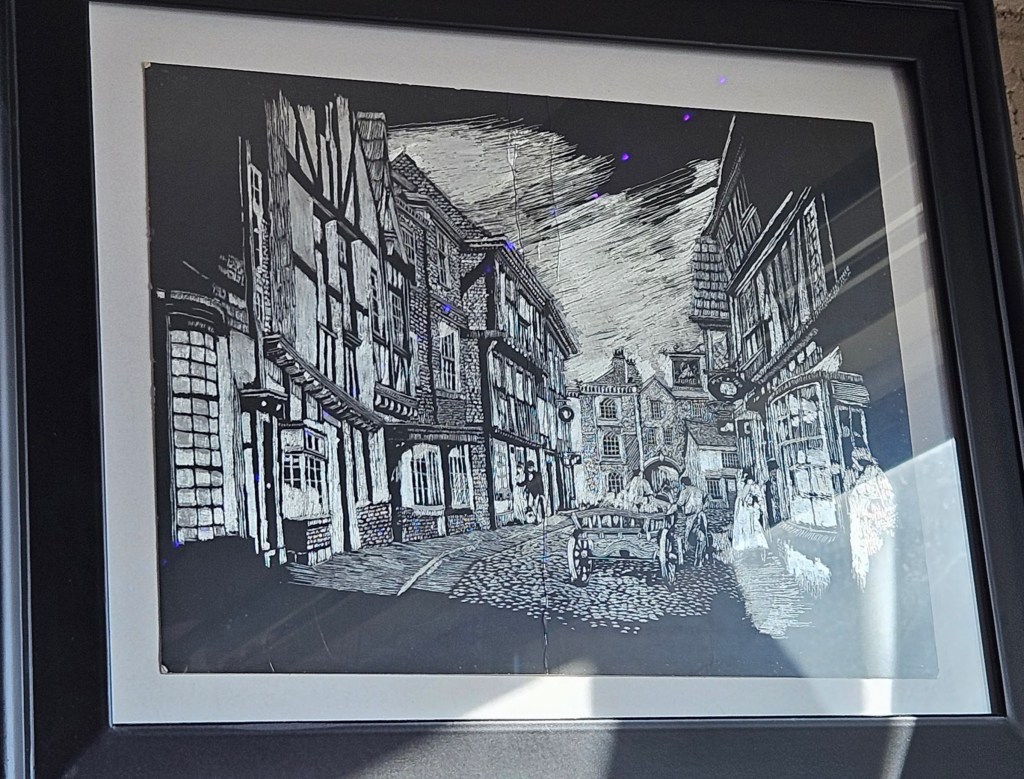
Bringing people out of panic mode, or out of a state of apathy, and watching their expressions carry hope, pride, and determination fills my heart with joy and fulfills me in ways none of my hobbies alone could ever do. I want to learn as many things as possible in my life, but the art of bringing people together through a solution- through a shared goal – is a skill I want to master. To me, there’s no better skill to have; and learning about as much of the world as I can is one way to develop it.

“Likable”

I saw a portion of a speech by Chimamanda Ngozi Adichie (3:45) in which she mentions not worrying about likability, and I was inspired. I’ve found this to be more true than ever in my professional life as well as my personal life – especially as a woman. “Likeable” is a word that we can use to describe so many kinds of people.

“Likeable” is a word that can be used to describe a manager who uses their authority to prey on a subordinate they view as attractive, to get what they want from that person with little threat of recourse, because they hold the power and others’ opinions of their likability. “Likable” is a mask used to make someone seem kind and friendly, when behind their mask they work to manipulate the situation, to stamp out anyone and anything that may paint them in a bad light or surpass them. “Likable” is a term to describe a pedophile, who is so beloved and trusted by friends, family, and neighbors that ever-cautious, diligent, protective parents will allow their most precious people – their children – close to that person. Meanwhile, that person spreads a stain across their child’s life, hidden behind their “likable” nature.

Likeable can be many things; used to describe deeply cruel and unethical people just as much as it can be used to describe kind and ethical people. “Likeable” is the teacher who buys hygiene products, food and clothes for students in need. “Likeable” can be the manager who takes an interest in each team member’s hobbies and personal goals. “Likeable” can be used to describe a lawyer who takes a case at a discount or pro-bono to help protect those who have been harmed by other, less-kind, “likable” individuals.

Some individuals are “likable” because they give all of themselves, without boundaries or limitations, to everyone who needs them-until they whither away to nothing inside and out. “Likeable” can be a person who says yes to everyone; never making anyone feel unwanted, unnoticed, or “too much”, but when asked to choose a side to stand up for others they will say “Not me. I’m staying out of it.”

I don’t want to be “likable”. I want to be the person that good and ethical people come to for advice because they know I am also good and ethical. I want to be hard working. I want to stand up for what is right; to not be afraid to go to battle to protect others or to prevent others from experiencing harms which were done to me. I do not want to be “likable”, I want to be the person bad people hate. I want unethical people to view me as the villain in their lives. I want those who bully, and manipulate others in order to meet their goals, to dislike that I will hold them accountable for their actions.

“Likeable” is a descriptive word for someone’s opinion of you gleaned from how much they can gain or lose based on your existence. It is not a descriptive word for moral code, or how trustworthy someone is. It is a mask that hides cruel and spiteful humans who require likability in order to avoid accountability. If I am likable to someone, just as equally I should be unlikable to someone else. If I base my worth and success on whether I am likable, I may lose the substance of character that makes me strong, ethical, compassionate, and dependable. I don’t want to be “likable”. I want to be respected.